
Council of Scientific and Industrial Research offeres grants for young researchers in a variety of science and math fields. Funds up to three years of research.
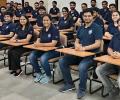
BITS has produced 10 startup unicorn founders in the US.
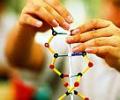
Last week, scientists working with the Institute of Genomics and Integrative Biology (IGIB) in New Delhi decoded the genome of a 52-year-old man from Jharkhand after nine weeks of study -- a first in the country. The feat has helped India join a select club of countries -- the US, UK, Canada, Korea and China.

A Traditional Knowledge Digital Library (TKDL) Access Agreement signed between the Council of Scientific & Industrial Research (CSIR) and US Patent and Trademark Office (USPTO).
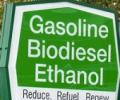
The project of deriving ethanol from a seaweed is all set to get a major boost with the Central Salt and Marine Chemical Research Institute deciding to ramp up off-shore production of the weed by manifolds.

Niclosamide, a drug on the World Health Organisation's list of essential medicines, has been used to treat tapeworm infestation for more than 50 years. The oral antiviral drug was also used to treat patients during the SARS outbreak of 2003-04.
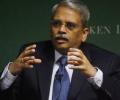
India needs to invest a lot more money in science research and translate this research into products and solutions for its people, says trustee at the Infosys Science Foundation and co-founder at Infosys Kris Gopalakrishnan.
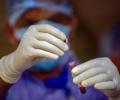
Named after 'Feluda', the detective character in legendary filmmaker Satyajit Ray's stories, the test has been developed by Debojyoti Chakraborty and Souvik Maiti as a simpler way of detecting SARS-coV2 presence in clinical samples, IGIB Director Anurag Agarwal said.

The Ministry of Science and Technology has approached about a dozen well-known scientists from across the world in an effort to bring them back to various departments under the ministry, said Jitendra Singh, minister of state (independent charge) for science and technology.

The non-viability of green crackers may pave the way for e-crackers.

Can we make high speed 4G Internet available at 10 cents per GB, and make all voice calls free of cost -- that too in a large and diverse country like India? Can we make high-quality but simple breast cancer screening available to every woman, that too at the extremely affordable cost of $1 per scan? Can we make a portable, high-tech ECG machine which can provide reports immediately and that too at the cost of 8 cents a test? Can we make an eye imaging device that is portable, non-invasive and costs 3 times less that conventional devices? Can we make a robust test for mosquito-borne dengue, which can detect the disease on day 1, and that too at the cost of $2 per test? Amazingly, says Dr R A Mashelkar, the eminent scientist, all this has been achieved in India, not only by using technological innovation but also non-technological innovation.

Rs 275 cr payment to Tata Power (SED) blocked for putting Indian part

'Let me talk about young Indian startups with their hearts in the right place and how they are proving that innovations that represent 'affordable excellence' -- breaking the myth that 'affordability' and 'excellence' cannot go together -- is indeed possible!' says Dr R A Mashelkar, the eminent scientist, in this fascinating feature.

5 things you must know about this scientific trailblazer.

The Planning Commission has not been central to the policy making process since the mid-1960s, says Nitin Desai.
.jpg)
Conservation of energy dominated Ghosh's thoughts ever since he completed his Masters in Energy Science and Technology from Jadavpur University early 2000.

'No PM has said no to anything we have proposed. I am not a politician and I cannot give speeches about things, but a lot of good things have been done in science by previous governments.' 'Under Dr Manmohan Singh, we could do a few important things. I used to meet him once in 6, 8 weeks. He often said, 'Professor Rao, you assume that you have my approval and carry on.' He was shy and decent. He is a real gentleman.' 'Science keeps me going at 80. I feel young.' Professor C N R Rao, the eminent scientist who was honoured with the Bharat Ratna, on the state of science in India.
 © 2026 Rediff.com - Advertise with us - Disclaimer - Privacy Policy - Sitemap - Feedback - About us - Terms of use - Grievances